by Himani Adsar
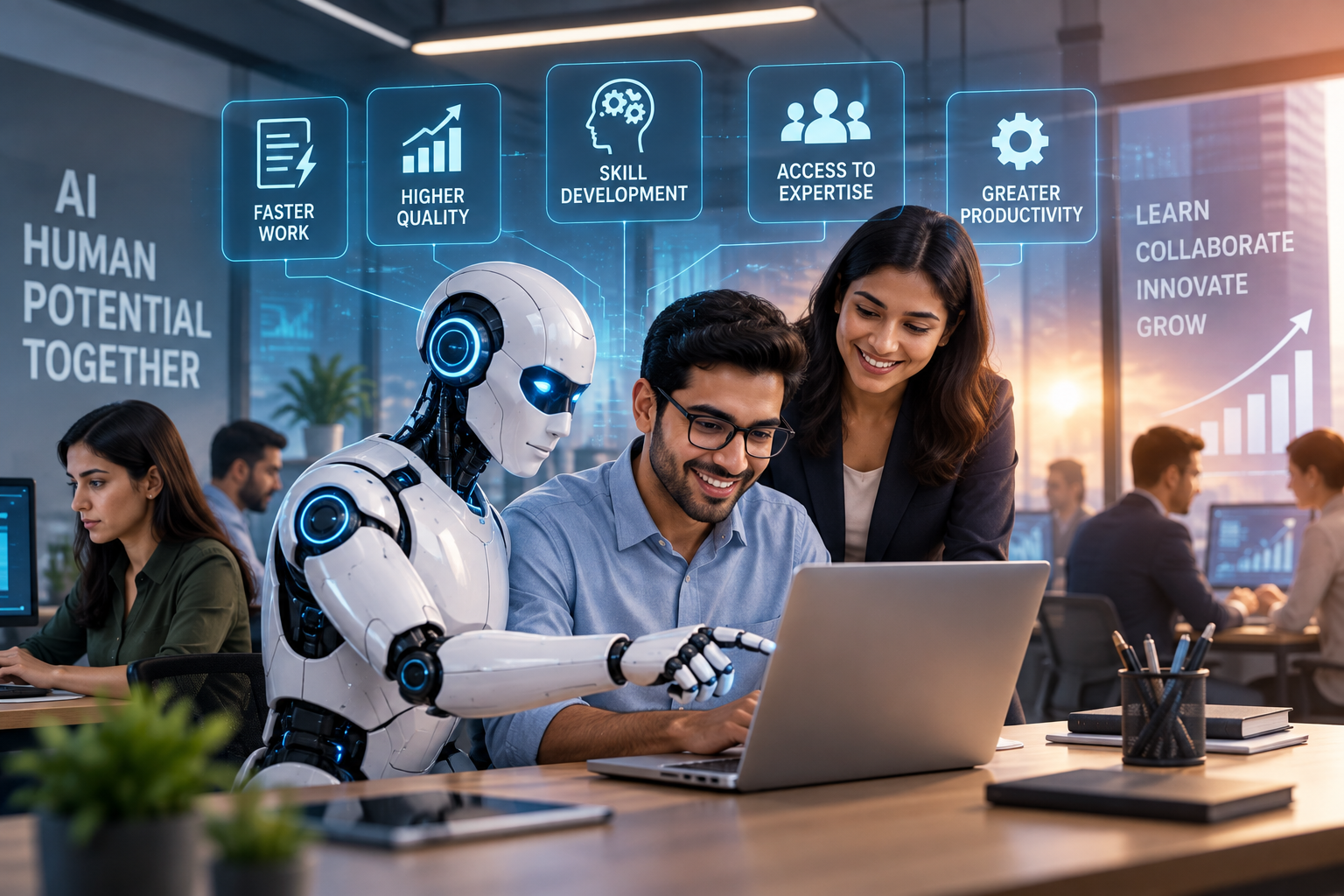
The debate surrounding artificial intelligence in the workplace often centres on a single question: Will AI replace human workers? Yet emerging empirical research points to a different and far more consequential story. AI is not only changing how work gets done; it is also transforming how people develop skills, access expertise, and perform complex tasks that once demanded years of experience.
As data analytics professional, I find the empirical evidence particularly compelling. In a study involving 453 professionals, workers using ChatGPT completed writing tasks 40% faster while producing work rated 18% higher in quality (Noy & Zhang, 2023). In software development, programmers using GitHub Copilot completed coding assignments 55.8% faster than those working without it (Peng et al., 2023). In customer support, research involving more than 5,000 agents found that generative AI increased productivity by an average of 14% (Brynjolfsson et al., 2023).
However, the key insight is not simply that AI makes workers more productive—it is who benefits most.
The customer support study revealed the most significant gains among less-experienced and lower-skilled workers. Agents with only two months of tenure, when assisted by AI, performed roughly as well as unassisted agents with six months of experience (Brynjolfsson et al., 2023). Research involving 758 management consultants at Boston Consulting Group revealed a similar pattern: those who started at lower baseline performance levels experienced the largest gains when using AI for tasks within its capability range (Dell’Acqua et al., 2023).
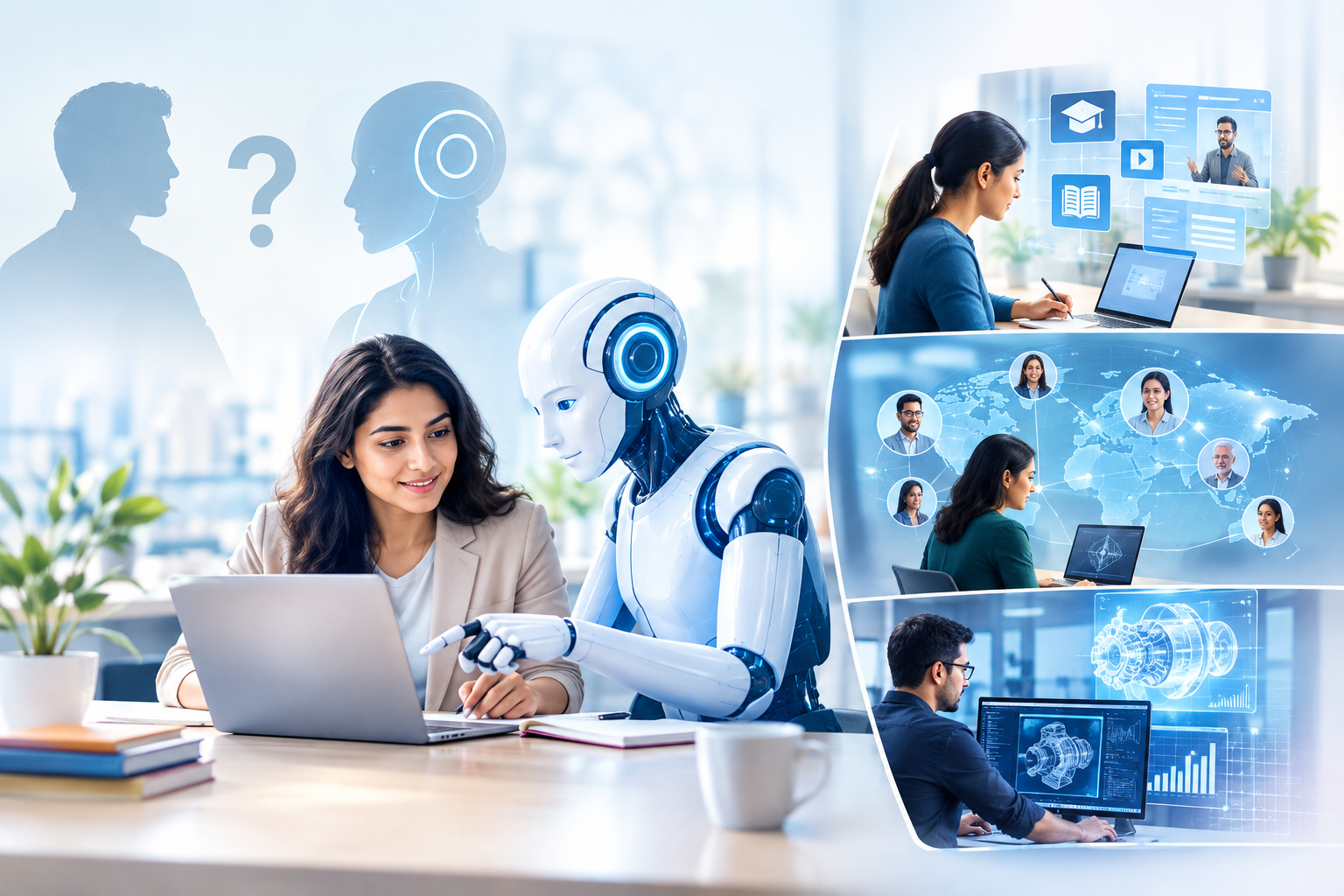
This points to a transformative shift. AI is becoming a mechanism for distributing expertise across an organization. A new employee can instantly draw upon suggestions, structures, and execution patterns that previously required months or years of observation and practice to master.
There is, however, a critical nuance. AI does not perform equally well across every domain. Dell’Acqua et al. (2023) demonstrated that while AI significantly improved performance on suitable tasks, relying on it for tasks outside its current capability range—the “jagged technological frontier”—actually reduced output quality.
Organizations should not view AI as a substitute for human experience or judgment. Its greatest value lies in helping people build capabilities, navigate unfamiliar work, and access institutional knowledge that was once concentrated among senior colleagues. Ultimately, AI’s most important contribution to the workforce will not be doing more with fewer people, but helping more people perform closer to their full potential.
(Author is data analytics professional in the US manufacturing sector)
References
– Brynjolfsson, E., Li, D., & Raymond, L. R. (2023). Generative AI at work (NBER Working Paper No. 31161). National Bureau of Economic Research. https://doi.org/10.3386/w31161
– Dell’Acqua, F., McFowland, E., III, Mollick, E. R., Lifshitz-Assaf, H., Kellogg, K., Rajendran, S., Krayer, L., Candelon, F., & Lakhani, K. R. (2023). Navigating the jagged technological frontier: Field experimental evidence of the effects of AI on knowledge worker productivity and quality (Harvard Business School Working Paper No. 24-013). https://doi.org/2139/ssrn.4573321
– Noy, S., & Zhang, W. (2023). Experimental evidence on the productivity effects of generative artificial intelligence. Science, 381(6654), 187–192. https://doi.org/10.1126/science.adh2586
– Peng, S., Kalliamvakou, E., Cihon, P., & Demirer, M. (2023). The impact of AI on developer productivity: Evidence from GitHub Copilot (arXiv:2302.06590 [cs.SE]). arXiv. https://doi.org/10.48550/arXiv.2302.06590

A Column By
Raju Korti – Editor
The Resource 24X7
A Journalist With 4 Decades of Experience With Leading Media Houses.