
Maharashtra has remained the birthplace of social and political movements that have influenced the course of Indian democracy for the past century. From the freedom struggle to farmers’ movements and campaigns against corruption, the state has repeatedly demonstrated the power of public mobilisation. In recent years, two individuals from Maharashtra—Anna Hazare and Abhijeet Dipke—have emerged as catalysts for large-scale public protests. While both succeeded in galvanising significant public support, the trajectory and consequences of their movements have been markedly different. The contrast between the two raises important questions about leadership, public responsibility and the need to preserve law and order while exercising the democratic right to protest.
Anna Hazare’s anti-corruption movement of 2011-14 remains one of the most significant mass mobilisations in independent India. Beginning with a fast at Delhi’s Jantar Mantar and later at Ramlila Maidan, Hazare demanded the enactment of a strong Lokpal law to combat corruption. His campaign resonated across social classes, attracting students, professionals, retired citizens and ordinary Indians frustrated by a series of high-profile corruption scandals.
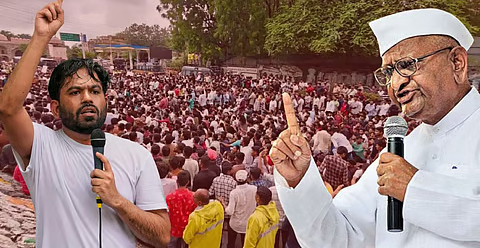
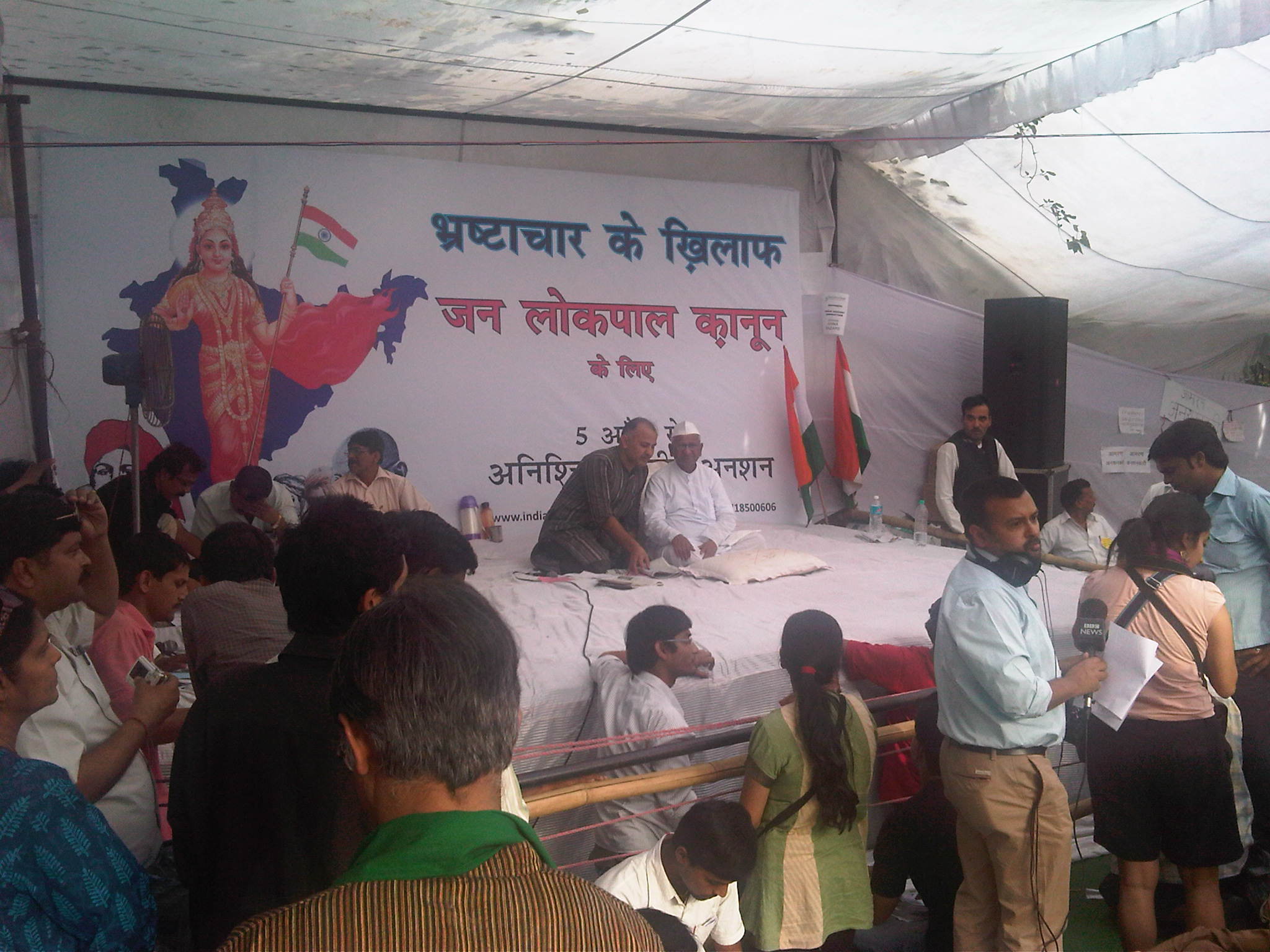
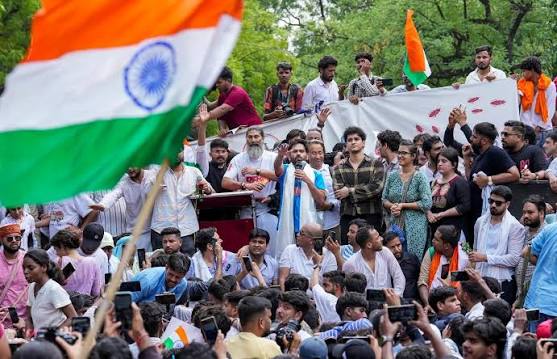
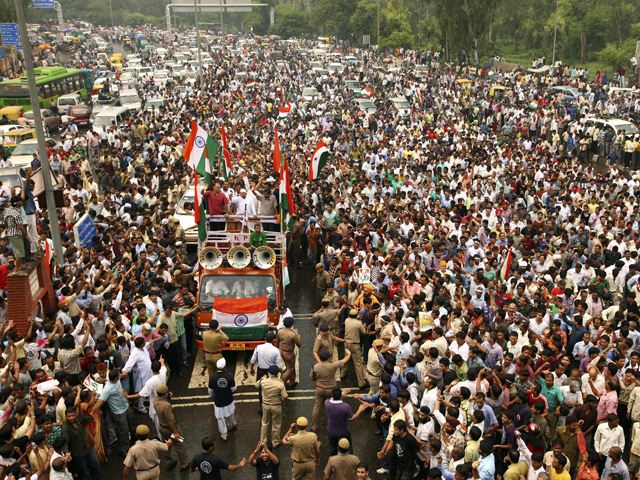
The defining feature of Hazare’s movement was its unwavering commitment to non-violence. Drawing inspiration from Mahatma Gandhi, Hazare repeatedly appealed to his supporters to remain peaceful, disciplined and respectful of law. Volunteers ensured that protest venues remained clean, orderly and free from violence. Demonstrators carried the national flag, sang patriotic songs and expressed their dissent without resorting to destruction of public property or confrontation with the police.
Although political debates surrounded the movement and critics questioned some of its methods and outcomes, there was little doubt that its leadership consistently discouraged violence. Whenever isolated incidents threatened to disturb public peace, Hazare himself appealed for restraint. The movement demonstrated that a nationwide protest could exert enormous pressure on the government while remaining firmly within the constitutional framework. Hazare’s blemishfree life gave a certain dignity to the protest.
The protest associated with Abhijeet Dipke presents a markedly different picture. Like many contemporary movements, it drew support through rapid mobilisation, emotional appeals and extensive use of social media. Large numbers of people responded enthusiastically, reflecting the ability of modern communication platforms to transform local grievances into mass agitations within a short period. The availability of smart phones accelerated the protest action and spread around the nation.
However, the developments that followed have generated serious concern among many observers. Reports of clashes, obstruction of public movement, damage to property and attacks on security personnel in connection with sections of the agitation have shifted public attention away from the original cause and towards questions of law and order. Even when organisers do not explicitly advocate violence, leadership carries the responsibility of anticipating the consequences of mass mobilisation and ensuring that public anger does not spill over into unlawful acts.
The difference between the two movements therefore lies not merely in the issues they raised but in the manner in which public participation was channelled. Hazare consistently reminded supporters that the legitimacy of a movement depended upon moral discipline. Any departure from peaceful conduct would weaken both the movement’s credibility and its objectives.
History shows that public protests derive their moral authority from peaceful conduct. India’s freedom struggle succeeded largely because violence was not permitted to overtake it. Peaceful protests create sympathy among the wider public, encourage constructive debate and strengthen democratic institutions. Violent protests, on the other hand, often alienate ordinary people, provide opportunities for miscreants to infiltrate crowds and compel authorities to focus on restoring order rather than addressing legitimate grievances.
One of the gravest concerns arising from protests that descend into disorder is the precedent they create. If future activists conclude that large-scale disruption, intimidation or attacks on public servants are effective means of extracting concessions from governments, India could witness an erosion of respect for constitutional methods of dissent. Such a trend would be detrimental not only to governance but also to the rights of peaceful protesters whose voices may be overshadowed by violent elements.
Security personnel deserve particular consideration in this discussion. Police officers are often required to perform an extraordinarily difficult balancing act. They must facilitate peaceful demonstrations while simultaneously protecting public safety, government property and the rights of citizens who are not participating in the protest. When they become targets of violence, they face risks while carrying out duties assigned under the law. Any assault on police personnel undermines the rule of law and weakens public confidence in democratic institutions.
Public property is another casualty when protests become violent. Roads, railway infrastructure, buses, government offices, and other civic assets are created using taxpayers’ money. Their destruction ultimately imposes financial costs on society itself. Moreover, disruption of transport, hospitals, schools and commercial activity affects millions of citizens who may have no connection with the dispute being protested.
Leadership, therefore, assumes immense importance. A movement’s organisers cannot always control every individual participant, but they can establish expectations, condemn unlawful conduct promptly, cooperate with law enforcement and continuously appeal for calm. Hazare understood this principle and repeatedly emphasised discipline as an inseparable part of his campaign. Any leader seeking to mobilise thousands of supporters must recognise that influence brings corresponding responsibility.
The comparison between Anna Hazare and Abhijeet Dipke is therefore not simply about two individuals. It represents two contrasting approaches to democratic mobilisation. One illustrates how moral authority, discipline and constitutional methods can generate nationwide support while preserving public order. The other highlights the risks that emerge when mass mobilisation is accompanied by allegations or incidents of disorder, creating anxiety about whether future protests may encourage disregard for the law.
India’s democracy is strengthened when citizens actively participate in public affairs, question governments and organise peaceful campaigns for reform. Equally, democracy depends upon respect for the Constitution, the rule of law and the rights of fellow citizens. Protest and public order are not mutually exclusive; they must coexist if democratic institutions are to flourish.
Fortunately, the supreme court has taken a firm stand against those trouble-makers who have indulged in violence, including attacking security personnel. The governments of India and Maharashtra also must adhere to this policy by not pardoning such elements.
As Maharashtra continues to produce influential social movements, future leaders would do well to remember that the enduring legacy of any agitation is determined not only by the cause it champions but also by the methods it employs. Anna Hazare’s movement demonstrated that peaceful discipline can inspire the nation and command widespread respect. Any movement that allows violence or lawlessness to overshadow its objectives risks diminishing its own legitimacy and creating precedents that could endanger democratic protest itself. The challenge before future generations is to ensure that the constitutional right to dissent remains a force for constructive change rather than a pathway to disorder. Maharashtra will have to lead the way, once again to ensure an orderly society that respects laws and people who respect each other.
A Column By
Dilip Chaware – Senior Editor
A media professional for 43 years, with extensive experience of writing on
a variety of subjects; he is also a documentary producer and book author.