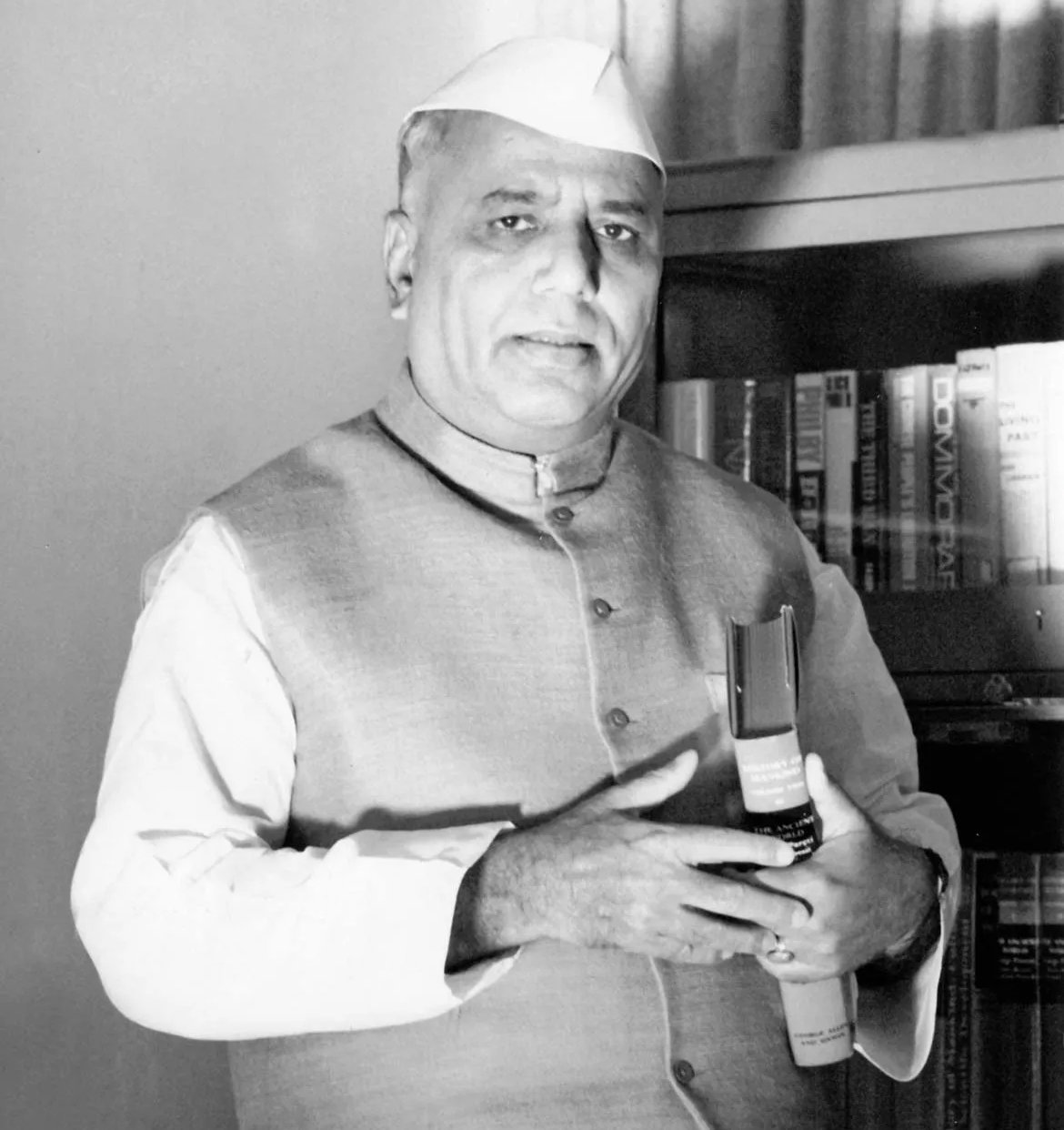
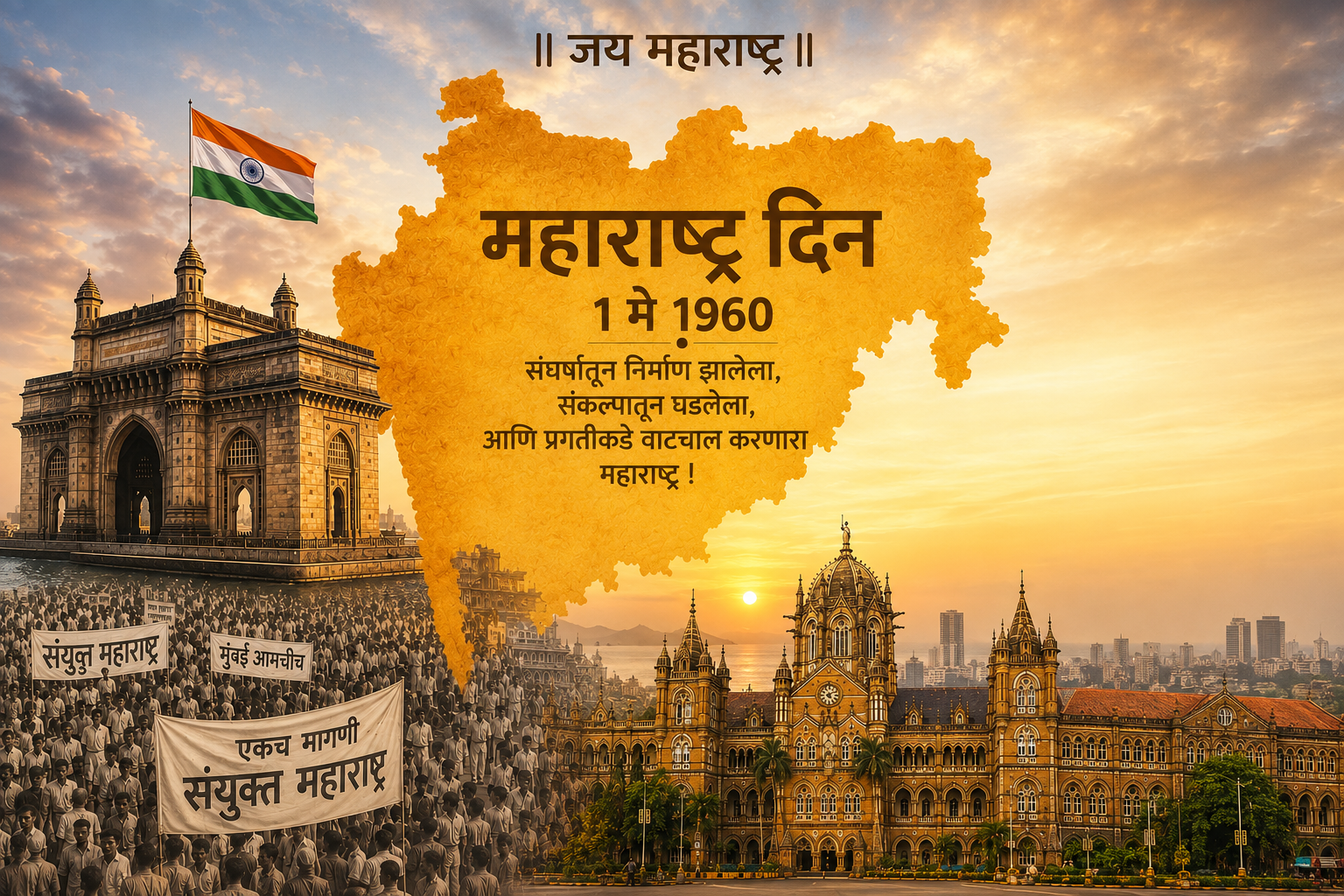
While we celebrate India’s Independence Day, it will be educative to introspect about Maharashtra. On 1 May 1960, Maharashtra was born as a separate state after a long and often painful struggle for a unified Marathi-speaking state with Mumbai as its capital. The formation of Maharashtra was not merely an administrative exercise. It represented the fulfilment of a powerful popular aspiration and the culmination of the Samyukta Maharashtra movement. The new-born state began its journey under the leadership of its first Chief Minister, Yashwantrao Chavan.
Today, 66 years later, Maharashtra has emerged as one of India’s most prosperous, industrialised and politically influential states. Its journey from 1960 to 2026 is remarkable. Yet its success story is incomplete. The state today faces a paradox: enormous wealth and opportunity coexist with regional disparities, agricultural distress, urban chaos, social tensions and increasingly competitive politics.
From an agrarian state to an economic powerhouse
When Maharashtra was formed, its economy was overwhelmingly dependent on agriculture. Industrialisation was concentrated largely around Mumbai and Pune. Over the decades, Maharashtra has systematically built an industrial base extending beyond Mumbai. Pune, Nashik, Nagpur and Chhatrapati Sambhajinagar. Kolhapur, Thane, Raigad and other centres have become important industrial and commercial hubs.
The cooperation movement is another distinctive feature of Maharashtra’s development. Cooperative sugar factories, credit cooperatives, banks, dairy institutions and agricultural organisations have created an economic and political ecosystem that has transformed rural Maharashtra. Whatever its later shortcomings and after-effects, the cooperative sector has played an important role in creating rural entrepreneurship and political participation.
Today, Maharashtra is India’s largest and most diversified state economies. According to the state’s latest advance estimates, its nominal Gross State Domestic Product is expected to reach approximately ₹51 lakh crore in 2025-26, while real GSDP is estimated at ₹28.83 lakh crore. The economy is projected to grow by 7.9 per cent, and per-capita state income is estimated at ₹3.48 lakh.
The structure of the economy has changed dramatically. Services, finance, information technology, entertainment, communications, construction, logistics, tourism, hospitality and modern retail now complement traditional manufacturing and agriculture. The latest estimates indicate particularly strong growth in services, while industry continues to expand, though not as fast as one wishes.
Mumbai remains India’s financial capital and Maharashtra’s greatest economic asset. The Bombay Stock Exchange, the Reserve Bank of India, major banks, financial institutions, corporate headquarters, media houses and entertainment industry have created an ecosystem that few other Indian states can match. Pune has developed into a major IT, automobile, engineering and education hub. The Mumbai Metropolitan Region is becoming an increasingly important logistics and infrastructure hub. It will continue to grow now that chief minister Devendra Fadnavis has announced the development of Third Mumbai, indicating at developing Fourth Mumbai in the near future.
Infrastructure has changed the geography of Maharashtra
The Maharashtra of 1960 and the Maharashtra of 2026 are vastly different in terms of connectivity. Roads, expressways, ports, airports, railways, metro networks and industrial corridors have transformed the movement of people and goods.
The Mumbai-Pune Expressway has changed the perception about infrastructure development. The Mumbai Trans Harbour Link has opened a new dimension to connectivity between Mumbai and Navi Mumbai and the wider Raigad region. Metro projects, coastal infrastructure, modern airports and logistics networks are changing the face of urban Maharashtra.
At the same time, infrastructure development has also exposed a major weakness: planning has often lagged behind construction. Roads are built without adequate maintenance, cities expand without sufficient public transport, wetlands are encroached upon, hills are cut and natural waterways are blocked. The result is flooding, landslides, traffic congestion and recurring disruption during the monsoon.
Agriculture remains the unfinished chapter
Maharashtra’s economic transformation has not eliminated rural vulnerability. Agriculture continues to employ a substantial section of the population even though its contribution to the economy is much smaller than that of services and industry.
The state is geographically and climatically diverse. Western Maharashtra can have relatively abundant water, while Marathwada and parts of Vidarbha face recurrent drought. At other times, excessive rainfall and floods create devastation in areas that were previously considered less vulnerable.
The latest economic estimates underline the problem. Agricultural growth is expected to slow sharply in 2025-26, even as industry and services perform better. This illustrates the fundamental challenge: Maharashtra cannot become genuinely prosperous if rural prosperity does not keep pace with urban prosperity.
Water management, irrigation efficiency, crop diversification, food processing, agricultural technology, storage facilities and better market access must therefore become central to the state’s development strategy.
The problem of unequal prosperity
Maharashtra’s greatest economic weakness is perhaps not poverty alone but unequal development. Mumbai, Thane, Pune and a handful of other districts generate enormous economic activity. At the other end are districts where incomes, industrialisation, employment opportunities and infrastructure remain substantially below the state average. Recent economic data indicates that a large majority of Maharashtra’s districts have per-capita income below the state average. Vidarbha, Marathwada and parts of northern Maharashtra require a stronger economic strategy. What is needed is actual implementation—land, electricity, water, connectivity, skilled manpower, financing and markets.
Maharashtra’s ambition of becoming a $1 trillion economy is achievable only if growth is geographically broad-based. Otherwise, the state could become richer while large sections of its population remain economically insecure.
Social progress—and social tensions
Maharashtra has traditionally been among India’s more socially progressive states. It has a strong legacy of social reform associated with Mahatma Jotirao Phule, Savitribai Phule, Rajarshi Shahu Maharaj, Dr B.R. Ambedkar and numerous reformers who fought caste discrimination and promoted education and equality.
The state has developed excellent educational institutions, a large network of universities and professional colleges, and a relatively sophisticated civil society. Women have increasingly entered education, professional employment, entrepreneurship and politics.
Yet social tensions remain serious. Caste-based mobilisation, reservation demands, rural distress, unemployment among educated youth and periodic communal or identity-based conflicts demonstrate that economic growth alone cannot guarantee social harmony.
The state hence needs to pursue development that is not merely measured by GSDP but also by educational quality, healthcare, employment, women’s participation, social mobility and the dignity of marginalised communities.
Politics: strength and challenge
Maharashtra has historically produced leaders of national stature and has been an important laboratory of Indian politics. Its political culture has accommodated the Congress, Socialist, Republicans, the Shiv Sena, the BJP, the NCP and other political traditions.
The challenge before Maharashtra’s political class is therefore to restore public confidence in democratic institutions. Political competition must remain vigorous, but it should be accompanied by policy continuity, institutional respect and accountability.
The next Maharashtra
The Maharashtra of 1960 had a dream: to create a prosperous, modern and culturally confident state. Much of that dream has been realised.
The state today has the financial strength, entrepreneurial talent, industrial base, human resources and geographical advantages required to remain India’s leading economic engine. Its 2025-26 economic performance confirms that it continues to possess formidable growth momentum.
The priorities are clear: balanced regional development, water security, modern agriculture, manufacturing, technology, better urban planning, environmental protection, quality education, healthcare, employment and fiscal discipline.
Maharashtra’s greatest achievement since 1 May 1960 is that it transformed itself from a newly created state into one of India’s principal economic and political powers. Its greatest challenge for the next 25 years is to ensure that this prosperity is sustainable, inclusive and evenly distributed.
If Maharashtra succeeds in combining economic dynamism with social harmony, political stability, environmental responsibility and balanced regional development, its next chapter could be even more impressive than the first sixty-six years.
A Column By
Dilip Chaware – Senior Editor
A media professional for 43 years, with extensive experience of writing on
a variety of subjects; he is also a documentary producer and book author.