
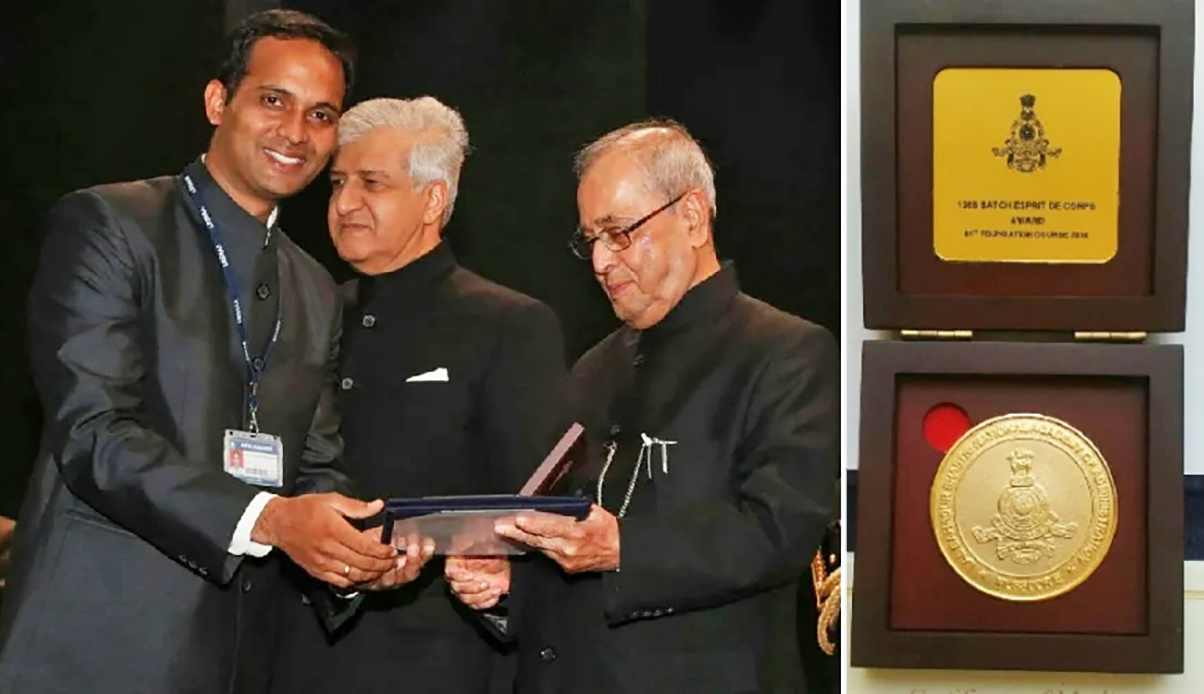
“Modern India” by Nitin Sangwan, IAS), is far more than a conventional guide to history. It is the outcome of a remarkable journey that lends the book both credibility and quiet authority. An Indian Administrative Service officer of the 2016 batch from the Gujarat cadre, Mr Sangwan secured an impressive All India Rank of 28 in the Civil Services Examination in 2015. His career has traversed multiple premier services including DANICS and the Indian Revenue Service before culminating in the IAS, where he has held significant roles such as CEO of Smart City Ahmedabad and Deputy Municipal Commissioner in charge of e-governance. Currently serving as Director of Employment and Training in Gandhinagar, he represents a rare blend of administrative experience and academic clarity. This lived understanding of both governance and examination dynamics finds a natural and powerful expression in the book.
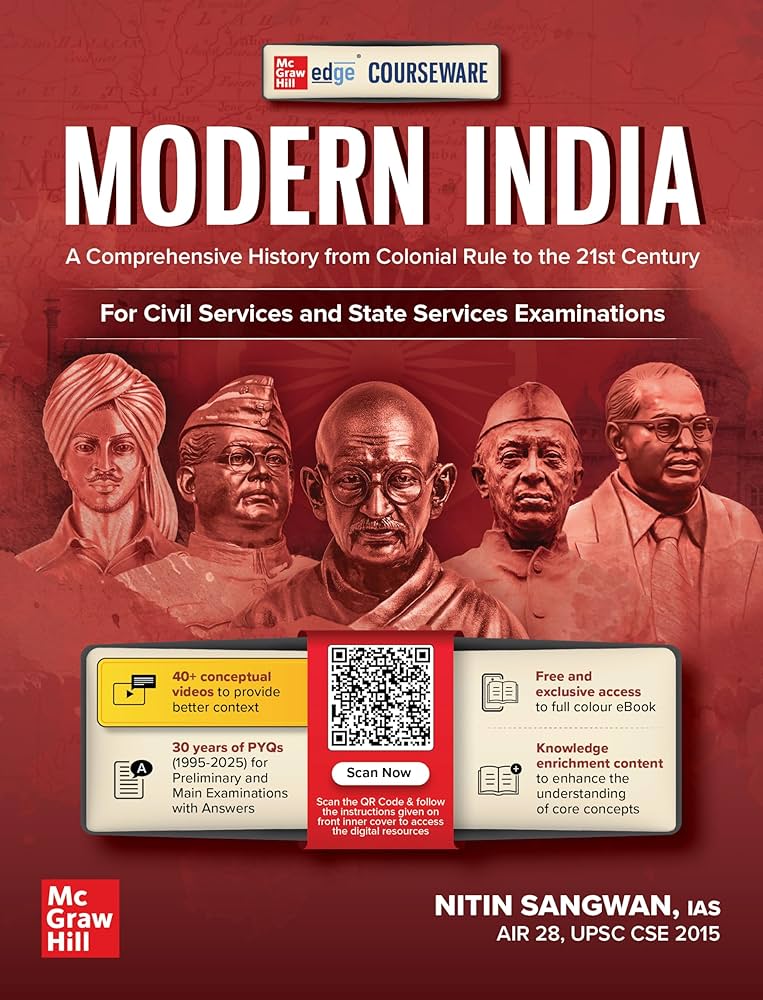
Right from the outset, the work distinguishes itself through its intent. It is not content with presenting a linear narration of events from the twilight of the Mughal Empire to post-Independence India. Instead, it consciously situates history as a living continuum of ideas, processes, and transformations. The operative spirit, reflected in the author’s preface, lies in simplifying complexity without diluting depth, and in enabling the reader to see connections rather than isolated facts. This approach aligns seamlessly with the evolving demands of competitive examinations where interpretation and analytical clarity are as critical as factual recall.
Published by McGraw Hill Education, the book bears the imprint of meticulous planning and thoughtful execution. Each chapter begins with a strong conceptual grounding so that the reader never loses sight of the larger picture while navigating intricate details. Carefully structured timelines run alongside the narrative, providing a chronological anchor through the dense and often turbulent phases of India’s colonial and post-colonial evolution. The journey from socio-religious reform movements to the rise of nationalism, and from resistance to institution-building in independent India, is presented with admirable coherence.
One of the most striking features of the book is its visual intelligence. Infographics, maps, charts, and custom illustrations are woven into the narrative not as decorative elements but as essential tools of comprehension. They transform complexity into clarity and enable the reader to grasp patterns and relationships with ease. In doing so, the book responds effectively to the needs of a generation that benefits from visual reinforcement without compromising academic rigour.
The pedagogical depth of the work is equally impressive. With over a thousand solved objective questions and an extensive compilation of three decades of previous years’ questions, the book bridges the often-overlooked gap between study and application. The descriptive answers for Mains preparation are crafted in a manner that gently trains the aspirant in structuring arguments, presenting balanced views, and writing with precision. It is this dual focus on Prelims and Mains that makes the book a complete learning ecosystem rather than a mere repository of information.
Another dimension that sets the book apart is its integration of technology. Through QR codes that unlock more than forty topic-specific video lectures by the author, the learning experience extends beyond the printed page. Sangwan recognises that certain concepts demand explanation and not just reading, and this blended approach ensures that understanding is both layered and lasting.
The language of the book remains consistently lucid and accessible. It welcomes beginners who are just stepping into the vast terrain of modern Indian history, while simultaneously offering depth and nuance for advanced aspirants in their final stages of preparation. Thoughtful inclusions such as “Did You Know” and “Bonus Knowledge” segments add an element of curiosity, making the reading experience both engaging and memorable.
Beyond the world of competitive examinations, the book has a wider appeal. For students of history, it offers a structured and analytical overview of one of the most transformative phases of India’s past. For educators, it stands as an example of how complex subjects can be communicated with clarity and relevance. For the general reader, it provides a meaningful lens to understand how India’s political institutions, economy, and social fabric have evolved through time.
The warm reception that the book has received, including its launch by Gujarat Governor Acharya Devvrat and its strong appreciation among aspirants, is a testament to its impact. Yet, what truly defines “Modern India” is not just its popularity but its purpose. It respects the seriousness of the subject and the aspirations of the reader in equal measure.
It is a book that does not merely prepare you for an examination. It prepares you to think, to connect, and to understand. In doing so, it transforms the study of history from a task into an enriching intellectual journey.
(Modern India, published by McGraw Hill Education, author Nitin Sangwan (IAS), pages 620) Available on https://amzn.in/d/08CaNjSO
A Column By
Raju Korti – Editor
The Resource 24X7
A Journalist With 4 Decades of Experience With Leading Media Houses.