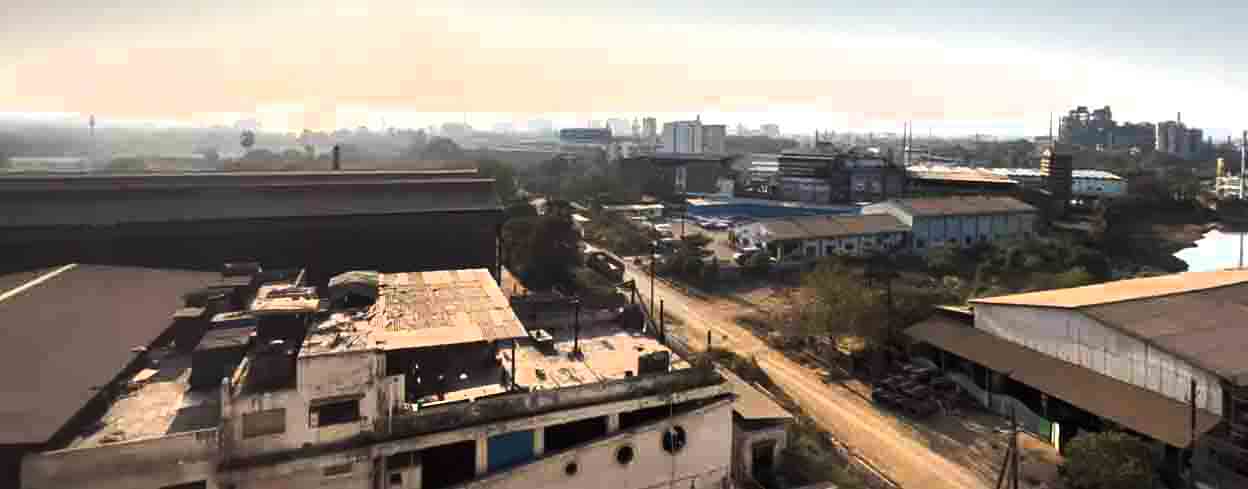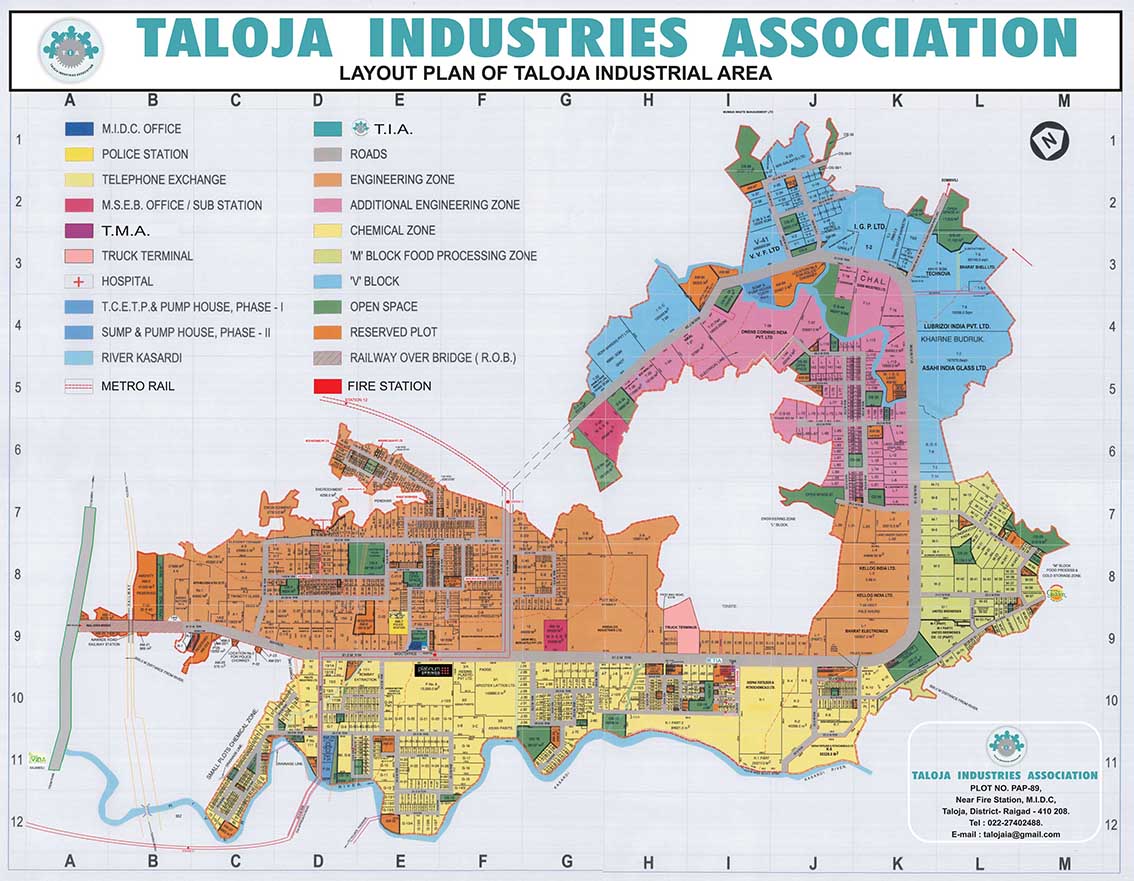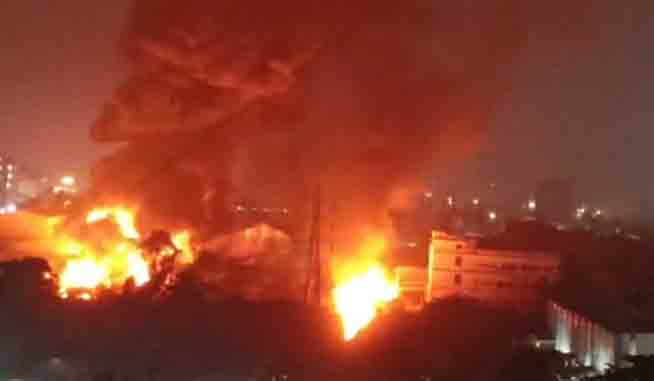
The massive blaze at Vighnaharta incense stick manufacturing unit in Taloja MIDC yesterday has spotlighted the hidden dangers of this industry. Beyond financial losses, it underscores how flammable raw materials and chemical storage can turn routine operations into potential catastrophes.
The massive fire that erupted late Thursday night at the Vighnaharta incense stick manufacturing company in Taloja MIDC, Navi Mumbai, is a stark reminder of the inherent risks in this sector. Incense stick production relies on raw materials such as sawdust, charcoal, and binding agents, often mixed with aromatic oils and chemicals.
These substances are highly combustible, and when stored in bulk, they create a tinderbox environment where even a minor spark can escalate into a devastating blaze. The combustion process itself releases harmful particulate matter and volatile organic compounds, similar to cigarette smoke, which can cause respiratory distress when inhaled, particularly in poorly ventilated spaces.
In the Taloja case, the fire spread rapidly as several drums filled with chemicals were stored within the premises, intensifying the flames and producing thick plumes of black smoke visible from afar. Such incidents highlight how mishandling and improper storage of flammable materials magnify risks, while the presence of concentrated chemicals raises the possibility of explosions.
The Taloja Fire Brigade deserves commendation for its swift and disciplined response. Three fire tenders rushed to the site, and firefighters worked tirelessly through the night to contain the blaze, deploying fogging systems to counter the chemical-laden flames. Their efforts ensured that all workers were safely evacuated, preventing casualties despite the scale of the fire. By preventing the spread of flames to adjacent units and maintaining continuous cooling operations, they not only saved lives but also safeguarded the wider industrial belt from a potential chain disaster.
The incident also resonates beyond the factory floor, reminding us that incense itself carries fire risks even in domestic settings. Leaving incense sticks unattended is a common practice that can lead to household fires, underscoring the broader hazards associated with this product. In manufacturing units, the dangers are multiplied by the scale of raw material storage and chemical use.
Finally, the dos and don’ts in such units must be emphasized. Workers must ensure proper ventilation and avoid overcrowding of chemical drums managers must enforce strict storage protocols and keep flammable materials segregated fire extinguishers and fogging systems must be maintained in working condition and drills conducted regularly smoking or open flames must be prohibited within premises and workers must be trained to respond calmly in emergencies authorities must insist on compliance with safety audits and companies must treat fire safety not as a formality but as a core operational priority.

A Column By
Raju Korti – Editor
The Resource 24X7
A Journalist With 4 Decades of Experience With Leading Media Houses.