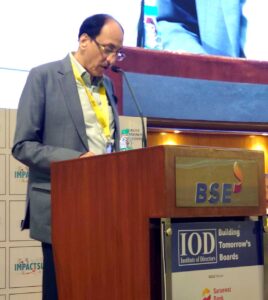
The Institute of Directors’ Western Region Conclave 2026 gathered India’s foremost governance minds to confront a single, urgent question: what does it truly mean to lead from the boardroom in an era of AI, regulation, and national ambition?
Institute of Directors, Corporate Governance, Viksit Bharat, Board Leadership, Digital Resilience, AI Governance, Independent Directors, IOD 2026
For a single, packed day in 2026, the Institute of Directors brought together some of the most consequential minds in Indian corporate life — not to celebrate governance, but to challenge it. The Western Region Conclave, held under the theme Redefining Responsibility in 2026, was a rare forum where the comfortable assumptions of boardroom culture were put under scrutiny, and where the answers that emerged were anything but routine.
The event drew eminent directors, policy leaders, regulators, and financial experts, all converging around a question of profound national relevance: as India accelerates toward its Viksit Bharat 2047 vision of becoming a fully developed economy, do the institutions steering that journey have boards fit for the purpose?
Governance is no longer about compliance alone — it is about building resilient, future-ready institutions that inspire trust and deliver sustainable value.
The opening address by Priti Arora, CGM IOD Mumbai set a tone that the conclave would sustain throughout: governance is not a procedural necessity, but a strategic imperative. Directors today must be equipped to provide informed oversight across an increasingly complex landscape — from financial stewardship and ethical leadership to digital transformation, cyber resilience, and artificial intelligence. The boardroom, she said, must evolve into a space that combines experience, diverse perspectives, and strategic courage.
That vision was reinforced with force by Sitaram Kunte, Chairman of the IOD Western Region and a former Chief Secretary of the Government of Maharashtra. He called for a fundamental shift in mindset — from supervision to guidance, from control to strategic foresight. Independent directors, he said, that in the current era directors must bring not just objectivity of position but independence of thought.
“Directors need to have the courage to ask difficult questions and the wisdom to navigate complex decisions.”
This was not an abstract aspiration. Speaker after speaker grounded it in the structural forces reshaping what boards must do today. Technological disruption, once a distant concern on boardroom agendas, has arrived as today’s operational reality. Artificial intelligence, data analytics, and digital infrastructure are redefining how organisations compete, manage risk, and create value.
The clear message from multiple panellists was clear – that, boards cannot delegate this domain entirely to management. Directors must develop sufficient fluency to ask the right questions — not merely whether a technology can be deployed, but whether it should be, what safeguards exist, and what happens when it fails.
“Technology and governance must reinforce each other. Compliance, when embraced genuinely, increases productivity — it is not a burden but a competitive enabler.” — Sunmesh Joshi, Deputy Director General, Department of Telecommunications, Government of India
The regulatory dimension proved equally compelling. Frameworks are becoming more comprehensive and more proactive — from data protection legislation to financial sector oversight. The conclave’s consistent message was that the most resilient institutions are those that adopt governance standards beyond what is strictly required. Boards that treat compliance as a ceiling, rather than a floor, find themselves perpetually behind.
The scope of board accountability, too, has expanded dramatically. The traditional model — directors answerable primarily to shareholders, success measured in quarterly returns — is giving way to a broader conception of purpose. Today’s boards are expected to account for their impact on employees, customers, communities, and regulators. This is not an ideological shift; it is a hard-nosed recognition that organisations ignoring their wider ecosystem ultimately undermine their own sustainability.
Perhaps the most resonant theme across the day was ethics and culture. One speaker observed that no institution fails overnight — problems begin quietly, when small exceptions become accepted norms and the most uncomfortable questions go unasked. The courage to govern well, the conclave affirmed, is what separates institutions that endure from those that merely survive.
What the Directors’ Dialogue 2026 made visible, above all, is that governance excellence is not an abstract ideal. It is built through specific, replicable choices: adopting frameworks before they are mandated, insisting on ethics committees with real teeth, recruiting board members for complementary expertise rather than familiar faces, and maintaining the independence of judgment that defines a truly effective director.
As India prepares to take its place among the world’s leading economies, the standard of its boardrooms will matter as much as the strength of its balance sheets. The Institute of Directors, through forums like this conclave, is building the platforms, curricula, and communities of practice that equip directors for exactly that challenge — ensuring that India’s governance story is one of ambition met, not promise squandered.
Disclaimer: This article is based on proceedings from the IOD Western Region Conclave 2026, held under the theme ‘Directors’ Dialogue: Redefining Responsibility in 2026′. The Institute of Directors is India’s premier organisation for corporate governance development and director education.