
Mumbai’s most ambitious tunnelling project has shifted gears from blueprint to reality. With its first giant boring machine now in action, the city inches closer to a faster, smoother commute.
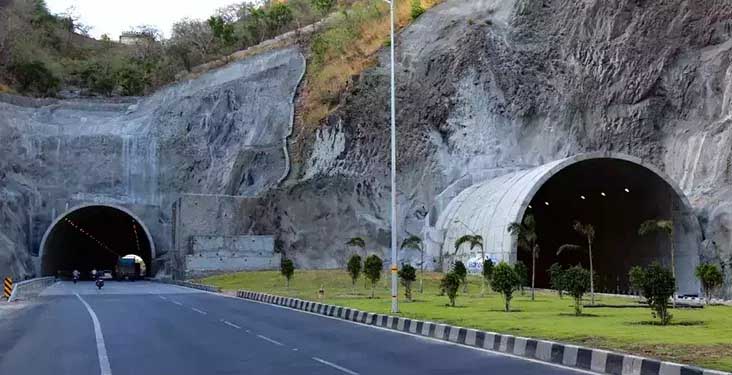
Work on the Thane–Borivali twin tunnel has officially moved into execution, marked by the launch of its first Tunnel Boring Machine (TBM), aptly named Nayak. Stretching 11.84 kilometres, the underground corridor is being developed by the Mumbai Metropolitan Region Development Authority (MMRDA) and executed by Megha Engineering & Infrastructures Ltd (MEIL).
Once complete, the tunnels will slash travel time between Thane and Borivali from nearly 90 minutes to just 15, offering a game-changing alternative to one of Mumbai’s busiest routes.
At the core of this effort is cutting-edge tunnelling technology. Four of the largest TBMs ever deployed in the city will carve twin tunnels beneath the Sanjay Gandhi National Park. Each machine measures about 86 metres in length, with a massive cutter head of 13.2–13.34 metres in diameter, designed to excavate hard rock at a steady precision speed of 4.5 rotations per minute.
According to MMRDA, Nayak, is a symbol of “strength, agility and precision.” A second TBM, Arjuna, is expected to be launched within a month, while two more machines will begin operations from the Borivali end to ensure simultaneous progress.
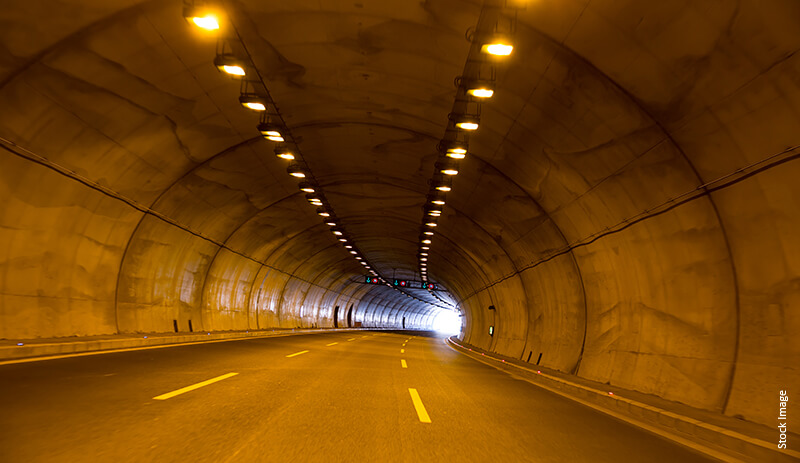
The tunnels are being designed for both capacity and safety. Each will accommodate three lanes, including a dedicated emergency lane, with cross-passages every 300 metres. Modern safety features such as advanced ventilation, firefighting systems, smoke detectors and LED signage will be integrated throughout.
Running from Ekta Nagar in Borivali to Manpada in Thane, the tunnels will reach depths of up to 23 metres. Despite passing under a protected forest zone, engineers have assured that vibrations will remain negligible, minimising disturbance to wildlife.
Environmental safeguards are central to the plan. A dedicated corridor has been created for debris transport to avoid residential areas, with strict caps on dumpers per hour. Dust and noise control systems, CCTV monitoring, and monsoon-ready dewatering pumps are part of the strategy to keep operations smooth and sustainable.
The project will run round the clock, with nearly 300 workers deployed at any given time. TBMs will be launched in phases, ensuring momentum while maintaining precision and safety.
A Column By
Raju Korti – Editor
The Resource 24X7
A Journalist With 4 Decades of Experience With Leading Media Houses.