
The idea of religious freedom lies at the very heart of India’s constitutional identity. In the diverse and pluralistic society that is Maharashtra, various castes and communities of different faiths, languages and traditions have coexisted for centuries. But for some stray incidents, this freedom is both protected and responsibly exercised. Still, it has become critically important to give it constitutional shield. The Maharashtra Religious Freedom legislation must therefore be understood not as a restriction, but welcomed as a framework designed to preserve harmony, prevent coercion and uphold the dignity of individual choice.
Some of the criticism of the legislation, which has been adopted by both houses of the state legislature, is valid. Though this is expected in a democratic set up, the opposition would have done well had it made some constructive suggestions to make the coming law more meaningful by recommending more stern safeguards. It is hoped that the State Governor and ultimately the President of India will scrutinise the legislation minutely before granting consent to it. The opposition charge that the Maha Yuti government is getting the legislation passed on the strength of its brute majority in the legislative assembly seems politically motivated as prolonged discussions have taken place in both houses before adopting the bill.
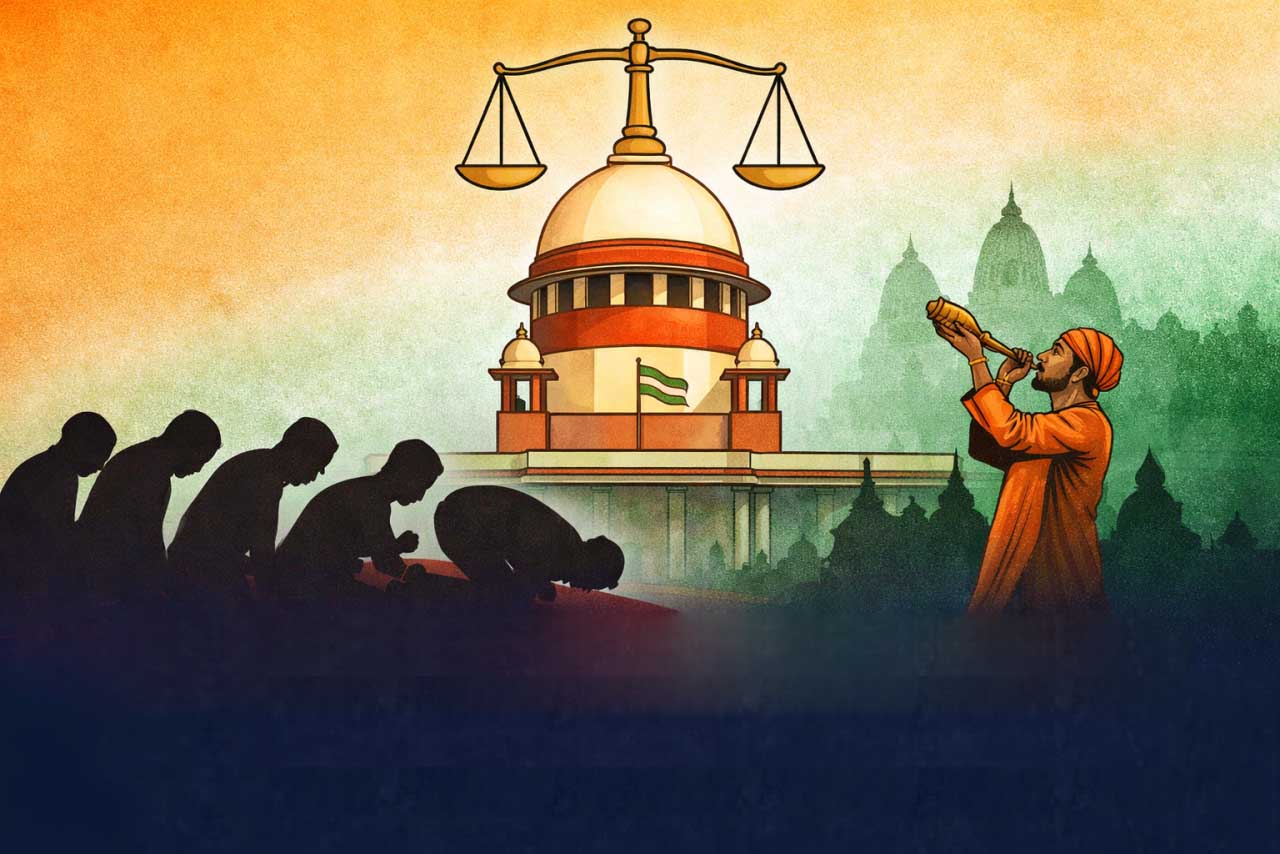
At its core, the legislation seeks to guarantee that every individual has the right to practice, profess and propagate their religion freely—while also ensuring that such freedoms are not misused through force, fraud or allurement. This distinction is crucial. Freedom of religion does not extend to the exploitation of vulnerable populations or the manipulation of faith for ulterior motives. By drawing this line, the proposed law reinforces the ethical foundations of religious liberty.
One of the strongest arguments in favour of such legislation is the need to maintain social harmony. Maharashtra, with its cosmopolitan hubs like Mumbai and culturally rich regions like Pune and Nagpur, has long been a melting pot of traditions. This diversity is a strength, but it can also become a source of tension if not managed carefully. Instances of forced or deceptive religious conversions, even if not rampant, have the potential to create mistrust between communities. A legal framework that discourages such practices helps prevent conflict before it escalates.
Critics often argue that such laws may infringe upon individual freedoms or be misused. While this concern cannot be dismissed outright, it is important to examine the intent and structure of the legislation. The Maharashtra Religious Freedom law does not prohibit voluntary conversion. It only mandates transparency and accountability, ensuring that any change in faith is a matter of personal conviction rather than external pressure. In this sense, the law actually strengthens individual autonomy rather than weakening it.
Another key aspect is the protection of vulnerable groups. Experience shows that in many parts of the state, economically or socially disadvantaged individuals may be more susceptible to inducements disguised as humanitarian aid or social support. The legislation acts as a safeguard, ensuring that assistance is not tied to religious conversion. This is not about denying help; rather, it is about ensuring that help is given unconditionally, without strings attached. True charity should uplift without influencing belief, the legislation underscores.
Furthermore, the legislation aligns with the broader constitutional framework of India. Article 25 of the Constitution guarantees freedom of religion but also allows the state to regulate or restrict activities that may be harmful to public order, morality or social health. The Maharashtra Religious Freedom law operates within this constitutional boundary. It is not an arbitrary imposition but a measured response to real concerns about misuse of religious freedoms.
From a governance perspective, such legislation also enhances transparency. By requiring prior declaration or post-conversion intimation to authorities, it creates a record that can be referred to in case of disputes or allegations. This procedural clarity benefits all parties involved—individuals, religious institutions and the state. It reduces ambiguity and helps prevent false accusations, thereby strengthening trust in the system.
It is also worth noting that similar laws exist in a dozen other Indian states. Maharashtra’s move is not an isolated development but part of a broader national trend aimed at addressing the same set of concerns. In this context, the legislation reflects a growing recognition that religious freedom must be accompanied by safeguards to prevent its misuse.
Importantly, the law sends a strong message about the value of informed consent. Faith is a deeply personal matter, often tied to identity, culture and family. Any decision to change one’s religion should be made with full awareness and without undue influence. By emphasizing this principle, the legislation elevates the sanctity of religious choice.
The role of the state in a secular democracy is not to promote or discourage any particular religion, but to ensure a level playing field where all faiths can coexist peacefully. The Maharashtra Religious Freedom legislation contributes to this objective by addressing practices that may disrupt this balance. It is a step toward reinforcing secularism in its true sense—not as the absence of religion, but as equal respect for all religions.
In the long run, the success of such a law will depend on its implementation. Authorities must exercise their powers with fairness, sensitivity, and impartiality, as the legislation implies. Safeguards against misuse must be robust and there should be mechanisms for redress in case of grievances. Civil society, too, has a role to play in promoting awareness and ensuring that the law is not misinterpreted.
Ultimately, the Maharashtra Religious Freedom legislation should be seen as a tool for strengthening the social fabric. It seeks to protect individuals from coercion, preserve communal harmony and uphold the integrity of religious choice. In a state as dynamic and diverse as Maharashtra, such measures are not only justified but necessary.
In conclusion, supporting this legislation does not mean endorsing restrictions on freedom; rather, it means advocating for responsible freedom—one that respects individual rights while safeguarding the collective well-being of society. By striking this delicate balance, Maharashtra sets an example of how a modern, pluralistic society can navigate the complex interplay between faith, freedom, and governance.
A Column By
Dilip Chaware – Senior Editor
A media professional for 43 years, with extensive experience of writing on
a variety of subjects; he is also a documentary producer and book author.