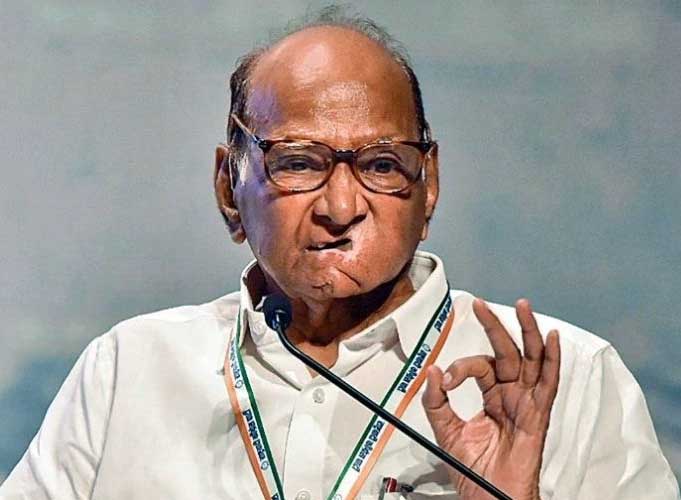
Veteran leader Sharad Pawar’s unopposed election to the Rajya Sabha and Bihar chief minister Nitish Kumar’s decision to enter the upper house of parliament can be described as two sides of the same coin, which is Indian polity. But there is a fundamental contrast. While Pawar’s election was a foregone conclusion, the sudden decision of Nitish to give up the stewardship of a major Indian state has proved to be intriguing. Whereas Pawar has evoked mixed reactions to his third RS term, Nitish has been praised, albeit the expected adverse comments from some Congress and Communist leaders. Thus, both have raised certain questions which are valid and demand convincing answers.
Pawar began his legislative assembly career in 1967 and has never lost an election, including his repeated bids for the Lok Sabha. When his family members ignored his fiat and entered the LS electoral fray some years ago, he decided not to contest any direct election. From then on, he has been occupying the front bench in the Rajya Sabha. Pawar has created a national record by being a member of both houses in the Maharashtra legislature and the Indian parliament. His four terms as the state’s CM and as a Union minister have proved remarkable. Hence, his tacit consent to file papers for the RS was not welcomed universally. The prominent among those representing this school of thinking was Aditya Thackeray, the scion of the Shiv Sena founder Bal Thackeray. Significantly, Aditya’s father and reigning leader Uddhav Thackeray remained silent, giving rise to the feeling that he was backing Aditya’s stand.
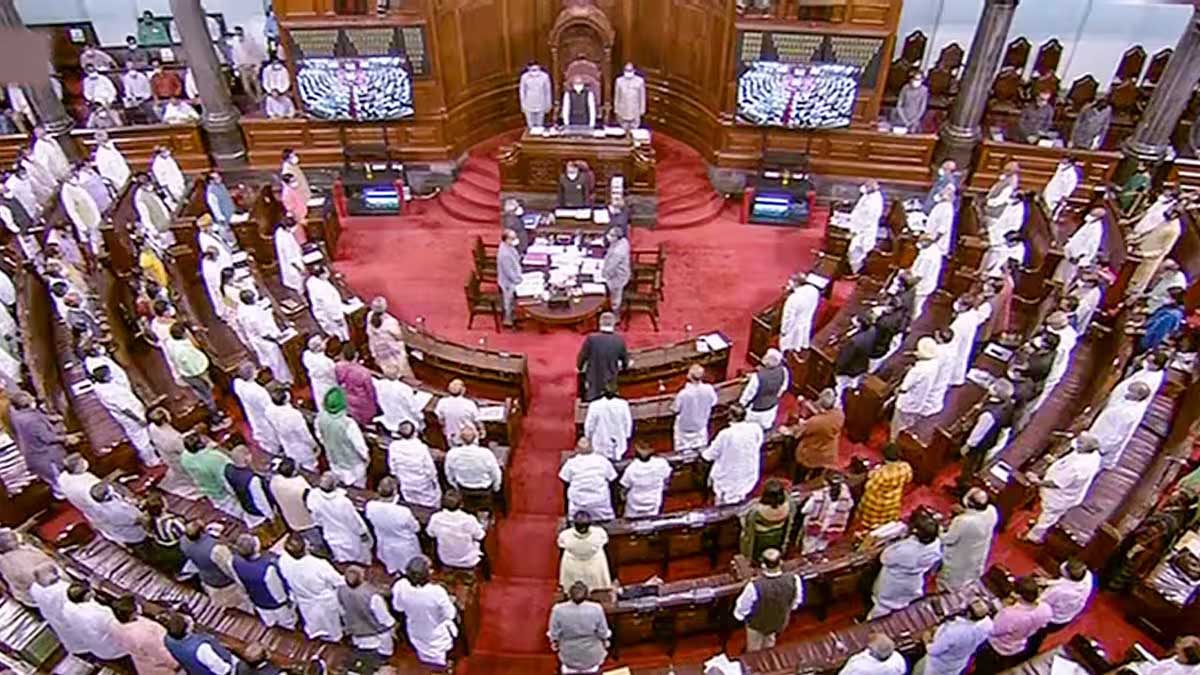
Another impediment in Pawar’s way was the Congress party, which time and again indicated its displeasure at the move to send the so-called Maratha Strongman to the RS. Second tier Congress leaders in the state continued to point out that the RS slot legitimately belonged to the Congress and hence there was no question of giving it up. This claim was not taken seriously. This opposition vanished when the BJP announced that it will contest the seventh seat also if Pawar was not the candidate.
The statistics in the Maharashtra legislative assembly is such that had there been an election, the ruling Maha Yuti could win six of the seats comfortably and even attempt for the remaining seat if the combined opposition tried to field anyone except Pawar. Ultimately, the power play went in favour of Pawar.
The outcome is that Pawar (85) and his grandson Parth Ajit Pawar (35) will find each other facing from the two sides of the RS, perhaps a unique occurrence in the annals of Indian democracy. Already, Supriya Sule, sole child of Pawar, is in the Lok Sabha. At the state level, late Ajit’s wife Sunetra is the deputy chief minister of Maharashtra. Pawar’s another grandson, Rohit, is a member of the legislative assembly. Thus, five members of the Pawar clan are law makers.
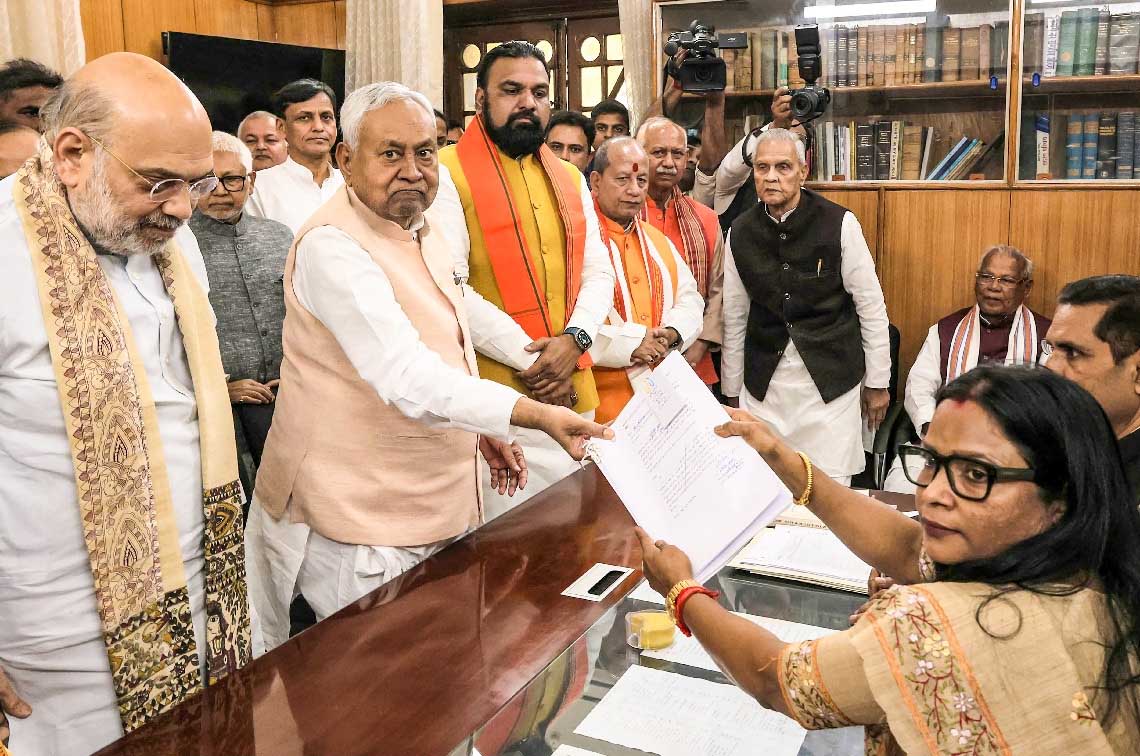
In Bihar, Nitish Kumar’s resignation as chief minister will script a new chapter for the state and the nation. If Pawar is the longest serving member, Nitish has created his own record by serving as Bihar CM for ten terms. Known as ‘Paltu Ram’ (Turncoat) owing to his partnering with arch rival Lalu Prasad and then the BJP as and when it suited him, Nitish has remained free of any serious blemish. Moreover, when he was the railway minister, he had resigned after a tragic rail mishap and this enhanced his image. But if his son is made a legislator, he also will have contributed to the ‘family rule’ syndrome in Indian politics. In that sense, he will not be too different from the general political tendency of taking care of one’s family by endowing political offices.
Another important consideration is the age factor. In case of Pawar, it was troubling to find that he was unable to come to the Council Hall to file his nomination owing to his fragile health. It was done by his authorized nominee Jayant Patil. Respected as a workhorse for decades, Pawar would begin his day at 7.30 am daily, wherever he was and would continue to meet people or attending meetings till late in the night. This routine never wavered, whether he was in the cabinet or in the opposition. However, over the past couple of years, his movements perceptibly slowed down. After the state assembly election results late last year, Pawar’s public appearances dwindled noticeably. His age started telling on him. Hence, even some of his ardent supporters and well-wishers were in two minds about his RS bid this time. Against this backdrop, Nitish Kumar’s decision to move away from the demanding job of a chief minister after turning 75 is considered laudable.
While Pawar’s nomination was yet to be finalized, the Nationalist Congress Party (NCP) he founded was a major factor. Pawar’s followers were determined that he will get another RS term. At the same time, the Ajit Pawar faction of the party was reportedly opposed to any understanding with the parent faction, making it obligatory that it should merge with the larger (Ajit) faction first. This was a stumbling block in the merger of the two factions. Sensing this opportunity, the BJP said it will keep one RS slot vacant for Pawar but not for anyone else. This forced the hand of the Congress and the Shiv Sena (UBT), who reluctantly fell in line.
All said and done, the situation faced by Pawar, once the string-puller in Maharashtra politics, was not heartening by any measure. His earlier decision to first announce and then withdraw his resignation as NCP chief had angered Ajit and his supporters so much that they decided to face the consequences of creating their own faction. Their decision to separate from Pawar proved to be a boon in the assembly election last year. Pawar’s NCP faction again suffered in the local body elections held across Maharashtra recently. Despite these setbacks, Pawar had never expressed a desire to keep away from the RS electoral fray.
In view of the BJP’s decision to retire its senior leaders at 75, Pawar and Nitish represent two poles in Indian political arena. It is high time this is given a thought by political leaders.
A Column By
Dilip Chaware – Senior Editor
A media professional for 43 years, with extensive experience of writing on
a variety of subjects; he is also a documentary producer and book author.