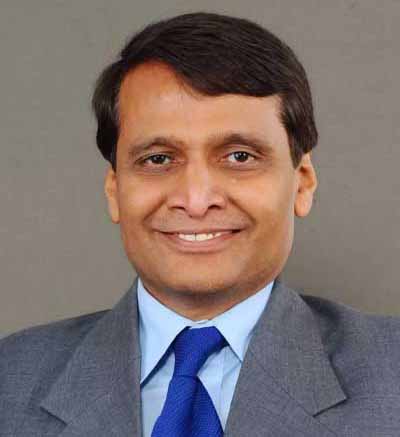
The unveiling of the National Cooperation Policy 2025 marks a historic milestone for India’s cooperative sector. Former Union minister Suresh Prabhu is the architect of the initiative. As the chairperson of its drafting committee, Prabhu has toiled for almost four years. “I feel proud to have worked alongside cooperative organizations and experts from across the country in shaping this policy, Prabhu has said. This policy embodies the vision of “Prosperity through Cooperation” and will guide the cooperation movement towards a stronger future.
It is a happy coincidence that Prabhu, a Maharashtra icon, was selected by Prime Minister Narendra Modi and Union home and cooperation minister Amit Shah, to handle this complex task of preparing the new policy. Maharashtra being the birthplace of the cooperation movement in India, the choice of Prabhu is most appropriate since he has proved his visionary leadership by making the Saraswat Cooperative Bank the largest cooperative bank in the country decades ago, at a comparatively young age.
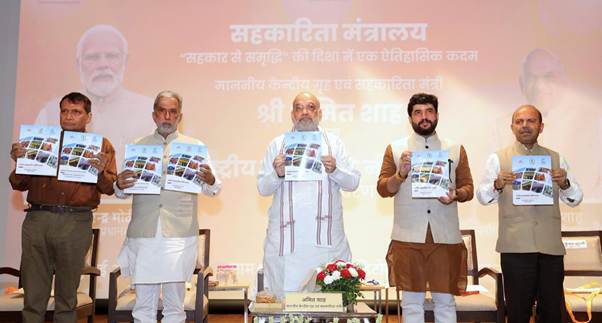
Paying rich tributes to Prabhu’s leadership, Shah has also thanked the 40-member committee, which has finalised the comprehensive and path-breaking Cooperation Policy after holding dialogue with various stakeholders over the years. Shah said that for a better future of cooperation, the 40-member committee was formed, which conducted regional workshops and held extensive discussions with cooperative leaders, experts, academicians, ministries, and all other stakeholders before drafting the policy. The committee received about 750 suggestions, held 17 meetings, and after consultations with RBI and NABARD, finalized the policy.
In 2002, for the first time, the Union government introduced a Cooperation Policy, and even at that time, it was the BJP in power, with the late Atal Bihari Vajpayee as Prime Minister. Now, when the government has presented the second Cooperation Policy, it is again the party in power. Only a party with a vision and its clear understanding of what is required for the country appreciates the importance of the cooperation sector, Shah has pointed out.
The new Cooperation Policy is a historic step toward fulfilling Modi’s vision of ‘Sahakar Se Samriddhi’ (Prosperity through Cooperation). The Modi government is working for India to emerge as the world’s third-largest economy by 2027. Alongside, it also holds the responsibility for the inclusive development of its 140 crore people.
Almost 75 years after Independence, the Ministry of Cooperation was established. At the time, the sector was in a sorry state. Over the past four years, the sector has shown potential to stand on equal footing with the corporate sector. While it is important for India to become the world’s third-largest economy, equal attention must be paid to development of its multitude. Only the cooperation sector has the capacity to develop the nation’s economy by involving all its citizens. The sector has a unique capability to pool small amounts of capital from many individuals to create a largescale enterprise at local levels. The focus of the policy is especially villages, agriculture, rural women, Dalits and tribals. It’s vision is to build a Viksit Bharat by 2047 through ‘Sahakar Se Samriddhi.’ The mission of the policy is to ensure that at least one cooperative unit is established in every village.
Shah further described the six pillars of the policy as follows : Strengthening the foundation, Promoting vibrancy, Preparing cooperative societies for the future, Enhancing inclusivity and expanding reach, Expanding into new sectors and Preparing the young generation for cooperative development.
The cooperation ministry has prepared a detailed plan for sectors like tourism, taxi services, insurance and green energy. The new cooperative entities will begin operations soon. The profits generated through these units will ultimately reach members of the Primary Agricultural Credit Societies (PACS) in rural areas.
A target of tripling the contribution of the cooperation sector to the country’s GDP by the year 2034 has been set. A major part of the objective is to bring 50 crore citizens into active participation. Additionally, there is a target to increase the number of cooperative societies by 30 per cent. At present, there are 8.30 lakh societies. Of them, over 2.33 lakh are in Maharashtra alone.
Under the policy, there will be at least one primary cooperative unit in every panchayat. These units will help in creating more employment opportunities, specially for the youth.
Shah explained the Model Cooperative Village initiative, which was first launched in Gandhinagar with NABARD’s association. Now, efforts will be made to establish five model cooperative villages in every tehsil through state cooperative banks. The participation of women will be linked to this initiative through White Revolution 2.0. A roadmap has been prepared to implement all these schemes through two dedicated committees. Additionally, a provision has been made to make necessary legal amendments every ten years to keep the policy relevant and effective.
Thus, through the cooperation policy, the goal is to make the rural and agricultural ecosystem, along with the poor of the country, a reliable and integral part of India’s economy to achieve the vision of Aatmanirbhar Bharat. A roadmap for balanced cooperative development has been prepared for every state. Based on this policy, India’s cooperative movement will advance steadily towards 2047, the centenary year of India’s independence.
A member-centric model has been established as the foundation of this policy. Welfare of each member is the basic objective of cooperation, which has guided the formulation of the policy that focuses on generating newer opportunities to enhance the participation of the vulnerable sections in the country’s economic march.
Another aspect is that well-performing scheduled cooperative banks are treated at par with commercial banks so that they do not face any kind of discrimination. To achieve global outreach and access to international markets, a body called the National Cooperative Exports Limited has been established. A model for PACS based on technology-driven management has already been developed. In the coming days, all cooperatives will adopt this management system.
The policy has the potential to resolve all the issues facing the cooperation sector, ensure its development over the next 25 years and position it at par with all other sectors contributing to the nation’s development. All the states have adopted the model bylaws, not allowing any political differences to come in the way. The work of setting up 45000 new PACS is nearing completion along with their computerization. Already, over 4100 PACS have been approved to open PM Jan Aushadhi Kendras whereas nearly 400 PACS have applied to run petrol and diesel retail outlets. More than 100 PACS have applied for LPG distribution. More and more PACS are working on managing the “Har Ghar Nal Se Jal” (tap water to every home) scheme and the PM Surya Ghar Yojana.
The establishment of the Tribhuvan Sahakari University has helped in supplying trained manpower for all these activities. By the end of this year, the government will also launch the ‘Sahakar Taxi’ initiative, under which the entire profit will go directly to the driver. For the International Year of Cooperatives, India has set its own goals and is working to implement them at the grassroots level.
The framer of this policy, Suresh Prabhakar Prabhu has been a prolific speaker, who has delivered more than 5000 lectures on education, economics, climate change, international relations, geopolitics, International trade, rural development, public policy, energy and sustainable development. He has been leading delegations of the government of India, business bodies and think tanks to global conferences, summits, meetings and talks across over 100 countries. He has traveled to over 120 countries across all continents, visited all states in India and explored nearly 80 percent of the districts in the country. This extensive travel has allowed him to better understand local issues and interact with various stakeholders. His deep knowledge and concern for the grassroots masses reflects through this policy. Maharashtra is proud of its son, Suresh Prabhu.
A Column By
Dilip Chaware – Senior Editor
A media professional for 43 years, with extensive experience of writing on
a variety of subjects; he is also a documentary producer and book author.